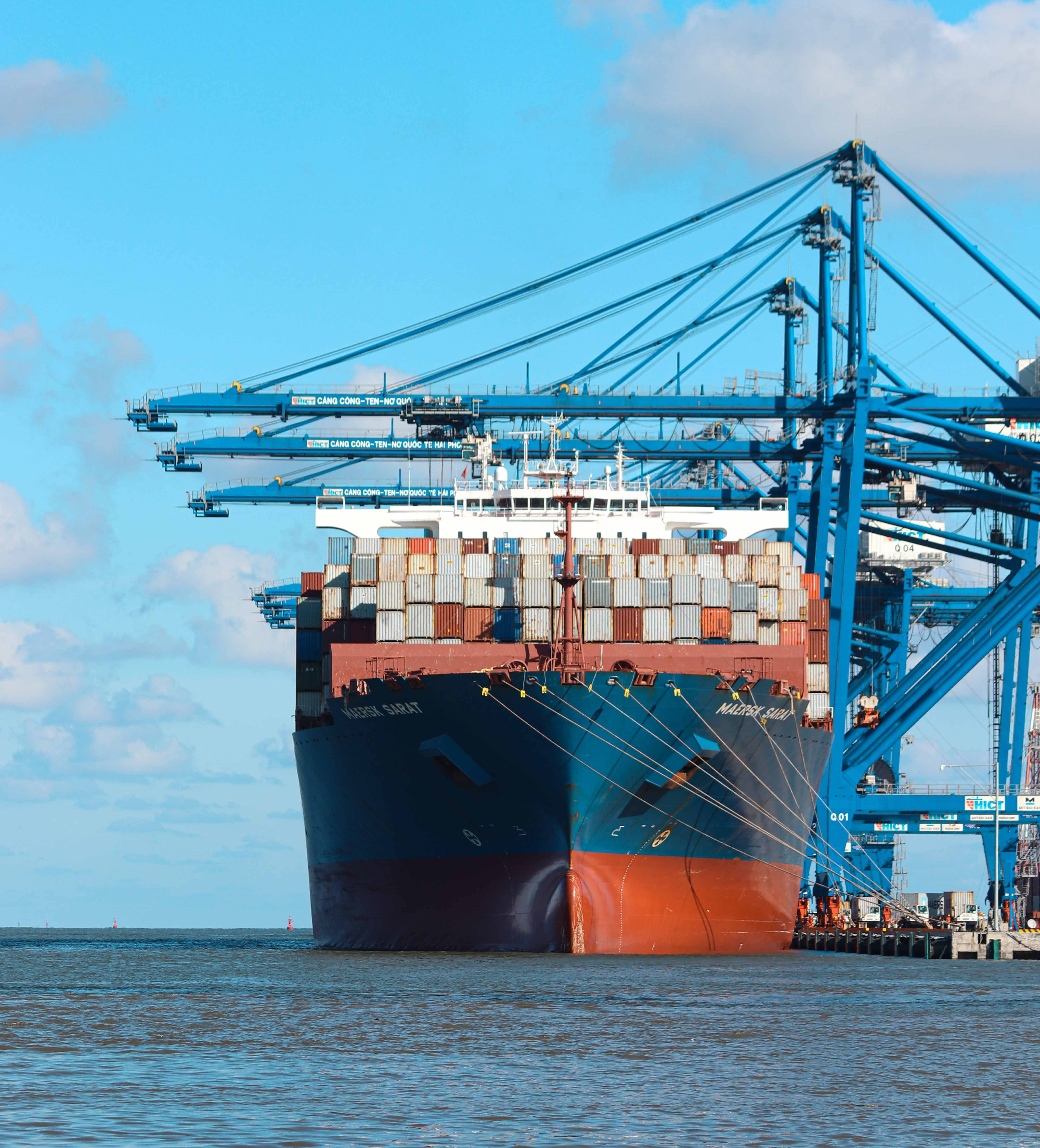
In a new Grant Thornton series on trending international insights, we examine the wider impact of tariffs on the mid-market, where a dip in market confidence at the start of 2025 was just the start of more to come. The global economy may suffer further as trade tensions and uncertainty persist, but if there’s a silver lining, its likely to be found in the mid-market – the most resilient and opportunistic segment of the business landscape.

In the next edition of Grant Thornton’s series on trending international insights, we examine how a shifting economic landscape can offer the mid-market an opportunity to grow while their larger counterparts opt to ‘wait and see.’ Our report highlights key trends such as digital trade, supply chain resilience, shifting trade agreements, and the impact of geopolitical uncertainty on international commerce.
Our strategic union marks a new chapter, as we now stand alongside New York, widely regarded as the asset management capital of the Western hemisphere; Cayman Islands, the funds capital of North America; Ireland, Switzerland, and Luxembourg, all funds capitals in Europe; the Channel Islands, the offshore financial services hub of Europe; and the Netherlands and Liechtenstein—both key financial centres in their own right. Read the full article to learn more:
Air freight terminals in the GCC region serve as pivotal cargo hubs in the global logistics industry. Situated at the crossroads of major international trade routes, these state-of-the-art facilities are critical for the efficient movement of goods across the world. With a focus on innovation, infrastructure development and strategic positioning, the GCC’s cargo terminals have emerged as vital links in the global supply chain.
In spite of the global downturn in the capital markets, the UAE has not only resisted this trend but has even shown record levels of IPO activity. This trend is likely to continue and provide organisations and shareholders new avenues for growth.
The regional economy performed strongly in the fourth quarter of 2022 owing to a successful FIFA World Cup, a booming tourism season, and favorable trade agreements being signed by energy exporters. Furthermore, the quarter saw an influx of new capital as international and domestic investors opened new offices in the region.
M&A activity in the regional logistics sector continues to be buoyant, fueled by the proliferation of trade agreements, a growing expat population and the continuing e-commerce boom.
The introduction of VAT into the UAE will soon be completing 5 Years, however, many businesses have been unable to understand and appreciate the VAT zero-rating conditions for exports of goods.
Amidst global economic uncertainties, the MENA region is on a growth trajectory fuelled by elevated oil prices and accelerating business-friendly reforms. The global logistics market is estimated to be $9.1Tn in 2022 and is expected to reach $12.3Tn by 2027, growing at a CAGR of 6.2%. A combination of initiatives by regional governments and developments in e-commerce are driving the growth in logistics and warehousing activity in the region.