The latest insight in our risk and resilience series outlines how organisations can strengthen contractual readiness and protect their position under UAE law. This series is developed to support business leaders to build confidence, resilience and continuity through disruption.
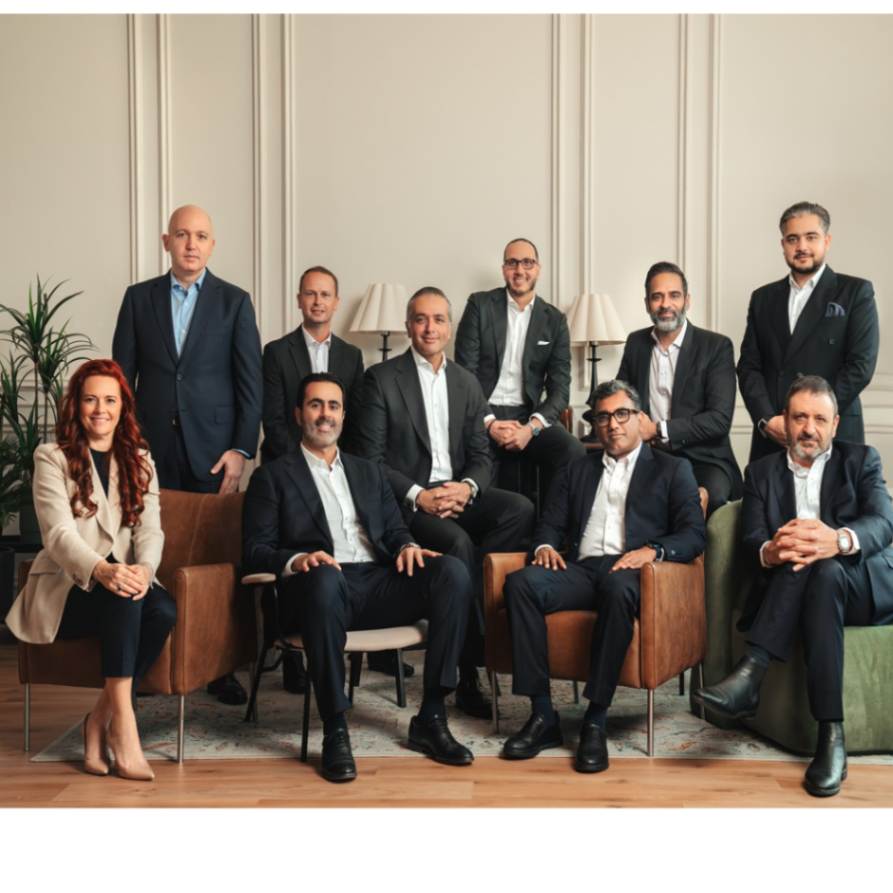
YOUR BUSINESS IS GROWING. SO ARE WE. Grant Thornton UAE is delighted to welcome ten new Partners, strengthening our leadership and reinforcing our commitment to delivering exceptional service to our clients. We remain focused on raising the bar to meet your evolving needs.
Cash flow and operational resilience
Exit readiness is critical for maximising value during a business sale or transition. Grant Thornton UAE outlines key factors, planning fundamentals, and a holistic approach to ensure smooth, successful exits.
The Discovery series 2025 highlights how women are driving change in the UAE’s financial services sector. Featuring key data, sector ambitions, and interviews with senior leaders in risk, audit, and compliance, this report offers insights into diversity, governance, and the future of finance.
Getting started with decarbonisation requires moving from strategy to action. This article outlines five key steps: securing leadership buy-in, measuring emissions, setting credible targets, embedding carbon into core decisions, and building long-term capability. With tightening disclosure rules and UAE’s Federal Decree-Law No. 11/2024, organisations must act now to reduce risks and unlock value. Grant Thornton helps businesses integrate climate goals into operations and ensure compliance while driving efficiency and growth.
Generative AI is transforming the UAE insurance sector through automation, personalised services, and advanced risk management. This article examines adoption challenges, responsible AI principles, and governance models that insurers need to stay competitive and compliant.
This article from Grant Thornton UAE explains why decarbonisation is becoming a core business strategy. It covers global disclosure trends, investor and market pressures, and practical steps for integrating carbon reduction into operations for long-term advantage.
In our September 2025 edition of GT’s regional monthly Tax Newsletter, we provide the latest news updates affecting International Tax, Corporate Tax, Transfer Pricing, and Indirect Taxes in the UAE and across the Middle East region.
2025 ICFR Benchmark Survey for UAE insurance sector: universal ICFR adoption, third-party risk management, resource gaps, spreadsheet reliance, and practical steps for audit readiness. Data-driven insights and roadmap for resilience from Grant Thornton UAE.
Disruption is now a constant in global business. This article from Grant Thornton examines how mid-market firms can thrive by building resilience, investing in technology, and adapting supply chains—turning instability into a competitive advantage.
Sustainability is a team sport, but more and more companies in face of increasing regulatory compliance and stakeholder expectations are looking for someone to be the captain. While passion for the subject is often a common attribute of people in these roles, more traditional skills are equally if not more important for successful integration of sustainability into business as usual. Here we take a look at a selection of the components that can help make this role a success.
We are pleased to present our latest F&B Sector Focus, designed to provide valuable insights for our clients and the wider F&B community in the region. Our team regularly publishes sector-focused editions, sharing our perspectives on the MENA F&B landscape, with a particular emphasis on the UAE.
This article outlines a strategic AI governance framework for UAE organizations, supporting the UAE National Strategy for Artificial Intelligence 2031. It addresses the “black box” problem in AI decision-making and proposes a shift to transparent “glass box” systems. Key components include data integrity, explainable AI (XAI), human-in-the-loop accountability, and continuous auditing aligned with standards like ISO 42001 and NIST AI RMF. The article also explores quantum risks and offers practical steps for future-proofing AI governance. Grant Thornton UAE provides tailored support to help UAE enterprises lead in ethical, compliant AI adoption.
The UAE’s business landscape has undergone a remarkable transformation from an era when customs duties were the primary regulatory touchpoint to today’s sophisticated tax ecosystem. The next significant milestone is the rollout of e-invoicing - a move that signals not just a VAT-related change but a broader shift toward digitalisation and real-time tax transparency. This evolution underscores the UAE’s commitment to aligning with global best practices while challenging businesses to rethink their operational and technological readiness.
What’s become increasingly clear from Grant Thornton’s latest International Business Report (IBR) research is that these businesses view sustainability as a path to growth, not an obstacle – and certainly not a compliance box to be ticked. They value the commercial opportunities sustainability can bring and are putting significant resource behind it. We see that firms in all regions remain committed to sustainability, largely because of the long-term benefits they perceive it brings to profit, revenue and international expansion. As such, their drive to build sustainability within their businesses is unwavering. It is a drive from which I believe we will all benefit.
Discover how recent amendments to the UAE VAT Executive Regulations set the stage for the country’s e-invoicing mandate. Learn about key regulatory changes, industry implications, and how Grant Thornton UAE can help your business prepare for digital VAT compliance.
In our July & August 2025 edition of GT’s regional monthly Tax Newsletter, we provide the latest news updates affecting International Tax, Corporate Tax, Transfer Pricing, and Indirect Taxes in the UAE and across the Middle East region.
In 2023, the International Sustainability Standards Board (ISSB) issued its first two international IFRS Sustainability Disclosure Standards (IFRS SDS), IFRS S1 ‘General Requirements for Disclosure of Sustainability-related Financial Information’ and IFRS S2 ‘Climate-related Disclosures’.